Start With Serving Size, Not Ingredients
Everything else on the panel is per serving, so reading the ingredient amounts before the serving size is reading numbers without a unit.
A product listing an impressive figure at a serving size of four capsules is a product whose bottle empties in a fortnight. Divide the capsule count by the serving size and you have the real supply, which is also the real price.
Percent Daily Value, And What Its Absence Means
A percent daily value can only be shown where an official reference intake exists, which in practice means vitamins and minerals. Botanicals do not have one, which is why they show a weight and a dagger symbol instead.
So a panel showing percent daily values for two entries and nothing for twelve others is not being evasive — it is telling you which two are nutrients. That is exactly the shape of the GlycoAid panel, where Chromium and Biotin carry values and the botanicals do not.
The Proprietary Blend Question
A proprietary blend is a group of ingredients declared under one combined weight. It is entirely legal and extremely common, and it has one real cost to the reader: individual amounts are not printed.
Three rules still apply to every blend on every label.
- Every ingredient in it must be listed by name.
- The list must run in descending order by weight.
- The total weight must be accurate.
The descending order rule is the free information almost nobody uses. Whatever appears first in a blend is the heaviest thing in it. Whatever appears last is the lightest. That single fact tells you what a formula is actually built around, and it takes three seconds to read.
Read The Other Ingredients Line
It sits below the panel in small type and it is where the capsule shell, the fillers, the flow agents and any colours live. It is also where an allergen turns up if there is one.
Common entries and what they are: vegetable cellulose or hypromellose is a vegetarian capsule shell, gelatin is not; rice flour and maltodextrin are bulking agents; magnesium stearate and silicon dioxide are flow agents. None of these are sinister, and the internet is considerably noisier about magnesium stearate than the evidence supports.
Standardisation, Which Is Where Real Differences Hide
Two products can both say turmeric root and differ by a factor of thirty. One means the dried spice; the other means an extract standardised to ninety-five percent curcuminoids.
Look for a phrase like standardised to and a percentage. Where it is absent, assume the less concentrated form. This single distinction explains more price differences between supplements than anything else on the label.
The Things That Are Not On The Panel At All
- Third-party testing. Not required, so its absence tells you nothing on its own. Its presence is a genuine positive.
- Bioavailability. A label states what is in the capsule, not what reaches your blood. Curcumin is the standing example.
- Which species. Cinnamon can be cassia or Ceylon and the label rarely says. That difference is covered here.
- Whether it will do anything for you. No panel can tell you that.
The One Minute Method
- Serving size. How many capsules, and how long does the bottle really last?
- Which entries carry a percent daily value? Those are the nutrients.
- Is there a blend? If so, read the order, not just the names.
- Any standardisation percentages? If not, assume the weaker form.
- Read the other ingredients line for allergens and for the capsule type.
That is the whole method, and it works on any supplement panel in any shop. The GlycoAid panel itself is laid out on the product page if you want something to practise on.
Questions
Questions On This Article
What does the dagger symbol mean?
It marks an ingredient with no established daily value, which in practice means a botanical rather than a vitamin or mineral.
Are proprietary blends bad?
They are legal and common, and they cost the reader individual amounts. Every ingredient must still be named and listed heaviest first.
What does standardised to mean?
That the extract has been prepared to contain a specified percentage of a marker compound. Without it, you are usually looking at the less concentrated form.
Is magnesium stearate a problem?
The evidence does not support the concern it attracts online. It is a flow agent used in a very large share of capsules.
Next
More From The Journal
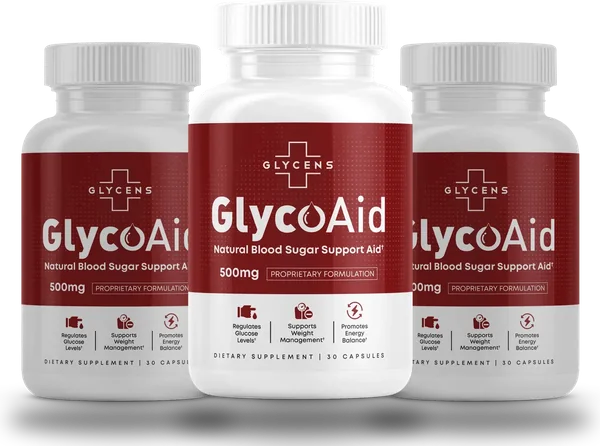
Start Your First Bottle Of GlycoAid
One capsule with a meal, a page here for every name on the label, and two months to send it back if it does nothing for you.
- One capsule a day, taken with food
- Fourteen ingredients, all named on the panel
- Free US delivery on the 3 and 6 bottle packs
- Sixty days to return it, opened bottles included